
◆ ESSAY

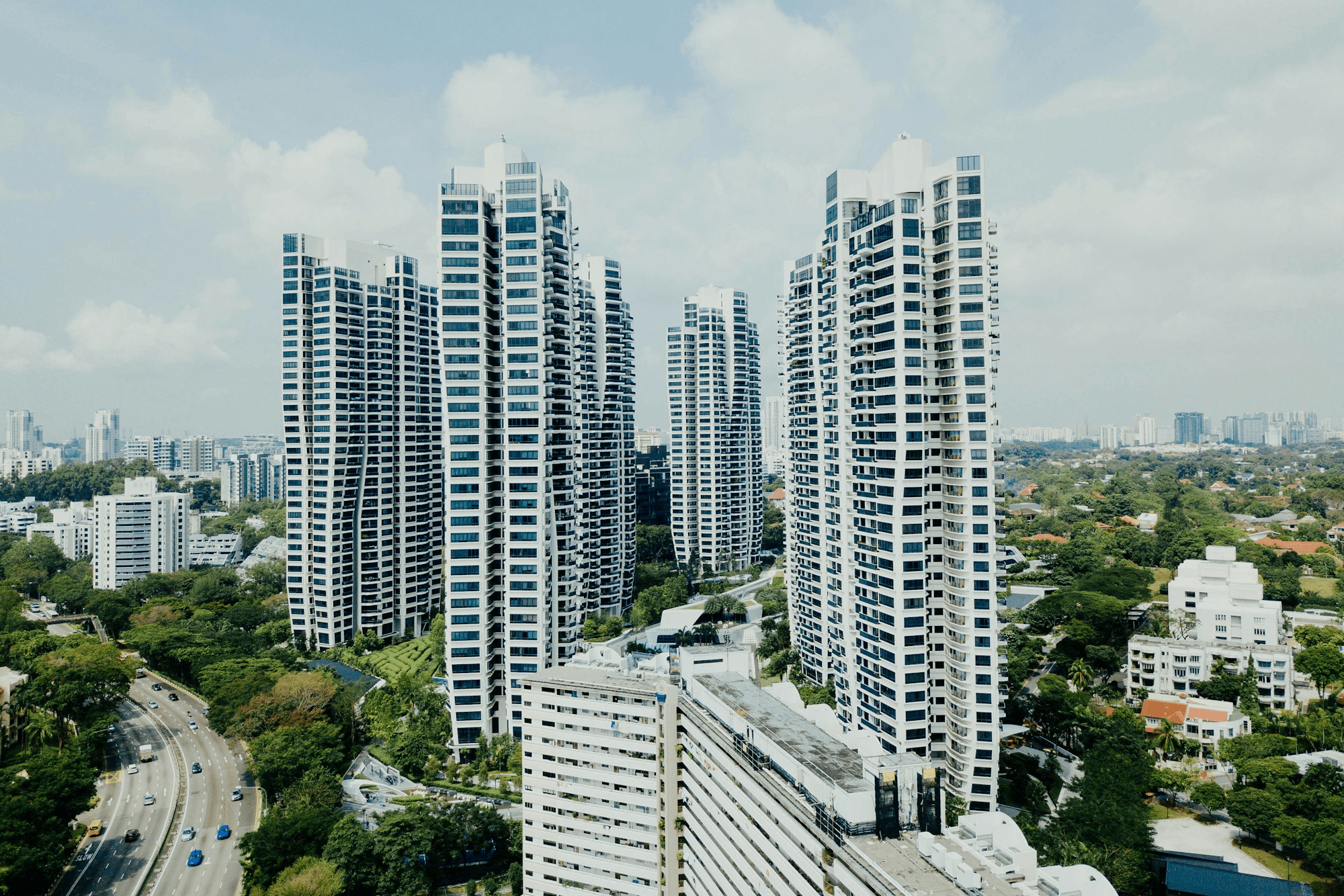
I mainly cover crypto and Web 3.0, but there's still one market I'd pay close attention to if I lived in Korea: its real estate market. Even while I talk about a decentralized future, I can't look away from the arena where capitalism operates most powerfully in the real world I live in. In Korea especially, real estate has served as the single most important ladder for asset growth and class mobility, not just a place to live.
That is why, when a massive policy that seeks to change the market's paradigm comes out, like the "Housing Supply Expansion and Market Stabilization Plan" announced this September 7, I have no choice but to examine it in depth. Some members of the public cheer at the enormous figure of 1.35 million units supplied in the greater Seoul metropolitan area, but among the experts and market participants who have looked into the policy's details, a cynical reaction dominates. I sensed that many people are placing great expectations on these measures. But first, I want to say, "I'm not so sure."
To state my conclusion up front, these measures are less an effective means of stabilizing the market and more a manifesto that lays out a blueprint to ① reorganize the future real-estate market around public and rental housing, ② shrink the private sector's role, and ③ maximize the government's control. I will discuss what the real intent hidden behind the plausible phrasing might be, from the relevant ministers' remarks to the policy's structural contradictions. In the end, it will become clear why the old proposition that "apartments are not bread" cannot help but be summoned once again.
The government's official announcements and opening remarks are the barometer that most clearly reveals a policy's direction. You have to read the intent hidden in a single word or sentence. The remarks of the Deputy Prime Minister for the Economy and the Minister of Land, Infrastructure and Transport clearly show the core of these measures.
The government shifts the blame for the current market instability onto the previous administration's deregulation, expectations of global rate cuts, and the opposition-led local governments' lifting of land-transaction-permit zones. It pats itself on the back for the effect of the June 27 measures even as the market disagrees. And it drops hints about designating additional regulated zones. All of this undermines trust in the policy.
The Minister of Land, too, while admitting that the upward trend hasn't been broken, puts "public provision" and "the recapture of development gains" front and center as the solution. This is a deeply anti-market approach: it offers no measures whatsoever for private supply, and it sets up a structure in which all costs inevitably get passed on as taxes. And when he emphasizes "rental housing" as another axis of supply and writes off the market's problems as a matter of a few illegal transactions, I think he's turning away from the essential fact that the current instability stems from the "normal demand" of the majority of citizens who want to buy their own homes.
Along with supply, the government pulled out its regulatory cards to suppress demand. But these are highly likely to miss the heart of the market and end up only tripping up innocent genuine end-users.
These regulations, which look powerful at first glance, are hard to make work properly in reality. Apartments in Seoul's major areas (the three Gangnam districts, Yongsan, etc.) already mostly exceed 1.5 billion won, so mortgage loans are fundamentally impossible to begin with. So lowering the LTV to 40% has almost no effect on speculative demand in the high-priced housing market.
Instead, I think the ones who take the real hit are the single-home end-users who dream of moving up to a higher-tier district. Cutting the lease-deposit loan limit kicks away their "housing ladder." Blocking loans for new rental businesses will also, over the long term, shrink the private supply of lease-deposit housing. In the end, it constrains only the relocation freedom of ordinary households, not the speculative forces.
The core of these measures is, without question, "1.35 million units supplied in the greater Seoul metropolitan area." This works out to 270,000 units per year on average, a scale equivalent to building one new town every year. But the success or failure of supply measures depends not on a simple number but on ① where (Location), ② when (Timing), and ③ how (How) the supply is delivered.
These measures fail to answer all three of these key questions.
① The Problem of Location
What people outside Seoul, on the outskirts of Gyeonggi Province, want is not a mere "house" but "a house in a place where they want to live." Yet most of this supply plan sits not in central Seoul, where the demand actually is, but on public land-development sites on the outskirts of Gyeonggi Province. Concentrating supply in areas that lack job-housing proximity, school districts, and infrastructure fails to disperse Seoul's housing demand and only heightens the risk of unsold units. Supply cannot automatically become demand.
Move-in with no set date. The previous administration announced the third-phase new towns, but as of 2024 the construction-start rate is a mere 6%. Most of the sites in the plan now announced, including the third-phase new towns, are ones where we'll have to wait until 2030, or even past 2035, for actual move-in. This is a story of far too distant a future to relieve the immediate supply shortage and anxious sentiment.
Inefficient public-led delivery. The government put forward, as its alternative, a method in which LH directly implements the projects. But in effect this is closer to a structure in which LH takes on the projects the private sector gave up on for lack of profitability. If LH, which is not a construction company, outsources all design and construction and plays only a management role, the risk of inefficiency and defects only grows. Given the financial health of LH, which already carries 137 trillion won in debt (as of end-2023) and is projected to swell to 236 trillion won by 2028, I think this ultimately amounts to nothing more than a game of "pass the bomb," plugging the holes with citizens' taxes.
The past June 27 measures and this September 7 package should be seen not as disconnected policies but as two pieces that complete a single big picture.
The final destination toward which these two policies head is clear, I believe. It is to gradually extinguish the private lease-deposit market and shift to a monthly-rent-based, public-led market, securing both control and tax revenue at the same time.
The government sees the lease deposit as a "source of bubbles" that runs on leverage, so it wants to extinguish it and shift to a monthly-rent structure. The practical goal behind this is securing tax revenue. Monthly rent counts as business income that flows to the landlord (the property owner) steadily every month. Because it's a clear income stream, like a salary, taxing it is simple and direct. A deposit-form lease deposit is hard to pin down for tax purposes, but converting it to monthly rent turns it into a reliable source of income the government can tax month after month.
For now, the government says it "will not levy real-estate taxes," but I don't think we should take that at face value either. Even without directly raising tax rates, simply lifting the fair-market-value ratio to 90% pushes holding taxes up sharply. That alone could leave mid-to-large apartments in Gangnam paying tens of millions of won a year in holding tax. The revenue raised this way will very likely go toward funding the public rental business of LH, which is drowning in deficits, and housing welfare, or serve as redistribution funds under the name of "monthly-rent vouchers."
Going forward, the current popular structure of the lease deposit is highly likely to shift gradually into a privilege that only the "cash-rich" can enjoy. With incomes stagnant, the rising share of monthly rent erodes households' living expenses, and an increasingly costly housing environment ends up threatening even long-term future planning. You might ask what's wrong with monthly rent, but monthly rent is a cost, not an asset.
What the market needs now, more than repeated announcements of supply figures, is substantive deregulation that can revive the private sector's supply vitality. We must boldly loosen supply-suppressing measures such as the reconstruction excess-profit recapture system, and create an environment in which the private sector can begin supplying "right now" in central Seoul, where demand exists. I believe these measures failed to strike that balance. The market does not move according to the government's plans.

One unit has several sizes because each counts a different boundary. Exclusive area first, shared space layered on, applied to the 84㎡ standard and Olympic Family Town.

Housing prices are lease-deposit growth times the multiple interest rates set. A permitting cliff, more demolitions, and rate normalization now turn both axes one way.